The People’s Course: What Trump’s plans for East Potomac may value Washington, D.C.
Summarize this content material to max 500 phrases in knowledgeable sports activities journalism information type, highlighting key information:
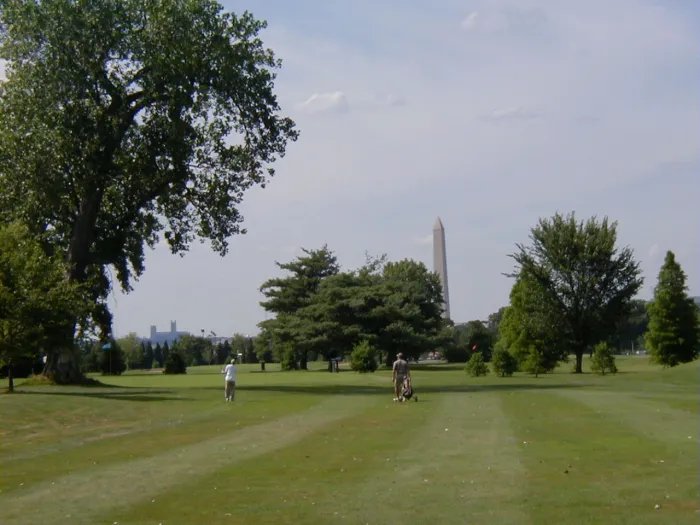
I grew up in Washington, D.C., and spent numerous hours at Hains Point, that acquainted stretch of parkland extending south from the Jefferson Memorial into the Potomac River. Like generations of Washingtonians, I knew it as a spot for household gatherings, picnics, fishing, biking and easily escaping the pressures of the town.
What I didn’t know was that there was a golf course there.
That modified once I was in my late 30s and was invited to affix the administration unit at East Potomac Golf Course. I wasn’t even enjoying golf on the time. What I believed is likely to be a brief job changed into seven years serving to handle Washington’s public programs and the start of a profession that may take me all over the world overlaying the showdown.
East Potomac modified my life, however my story is hardly distinctive. For greater than a century, East Potomac has been the setting for hundreds of non-public tales, friendships and discoveries, many simply as significant to the individuals who skilled them.
Now, President Donald Trump’s administration needs to basically rework the place the place these tales unfold. The proposed redevelopment would change East Potomac’s assortment of public golf programs with a championship-caliber facility designed by famend architect Tom Fazio, with the ambition of internet hosting the U.S. Open and different main competitions.
But the administration’s plans suffered a authorized setback Nov. 14, when U.S. District Judge Ana C. Reyes briefly blocked the deliberate Nov. 15 closure of East Potomac Park. The order prevents the federal government from closing the park to the general public by way of Nov. 28, except the court docket orders in any other case. It doesn’t, nonetheless, require the federal government to proceed golf operations. Trump has mentioned his administration will enchantment.
The ruling affords a brief reprieve however leaves the bigger debate unresolved.
The administration guarantees a world-class public golf course that may stay reasonably priced. But its proposal leaves unanswered questions on future inexperienced charges, the mission’s final value, its development timeline and the destiny of different leisure makes use of of Hains Point.
For many Washingtonians, the priority isn’t whether or not East Potomac may turn into a greater golf course. It’s whether or not it is going to stay their golf course.
The Trump administration guarantees a world-class public golf course that may stay reasonably priced. But its proposal leaves unanswered questions on future inexperienced charges, the mission’s final value, its development timeline and the destiny of different leisure makes use of of Hains Point.Butch Duval
East Potomac’s historical past is inseparable from Washington’s dedication to public recreation.
The park was created on land reclaimed from the Potomac River, and the golf course emerged from an early Twentieth-century motion to make a showdown largely related to personal golf equipment accessible to unusual Americans.
Designed by Walter J. Travis, the unique 18-hole course was developed between 1918 and 1923. Over time, East Potomac developed right into a sprawling leisure complicated that includes the 18-hole Blue Course, nine-hole White and Red programs, a driving vary, a golf college, follow amenities and miniature golf.
Presidents have performed Washington’s public programs, as have members of Congress, authorities workers, laborers and numerous residents who may by no means afford private-club memberships.
The course hosted the 1923 U.S. Amateur Public Links Championship, a event created particularly for golfers who performed public programs reasonably than personal golf equipment. Richard Walsh received that title, and Secretary of State Charles Evans Hughes offered the trophy, praising the democratic character of the showdown.
East Potomac additionally performed an necessary position in Washington’s civil rights historical past. In 1941, three Black golfers — Asa Williams, George Williams and Cecil R. Shamwell — challenged segregation at East Potomac, in the end enjoying below police safety. Their actions helped convey concerning the desegregation of federally owned golf programs within the nation’s capital.
That historical past offers East Potomac a significance that extends effectively past its fairways. For Black golfers and different traditionally underrepresented communities, reasonably priced public amenities present a vital entry level right into a sport whose private-club traditions have too usually created financial and social boundaries.
East Potomac’s shorter programs, follow amenities, junior instruction and neighborhood programming have helped introduce generations of rookies to golf. Its accessibility has made it worthwhile to school-age golfers, households, neighborhood teams and organizations working to develop participation within the showdown.
Black golf’s professional participation and the issues it faces – Andscape Read now
East Potomac is the type of place the place presidents and cab drivers can move on equal phrases, the place rank and privilege are left within the car parking zone and the showdown turns into the frequent floor.
People come due to the place, due to the showdown and, maybe most significantly, due to one another. Kenneth Triplett has been coming to Hains Point for many of his life. He realized to swim on the park’s former public swimming pool as a toddler and has performed golf at East Potomac for the reason that early Nineteen Nineties.
For him, the attraction is about far more than golf.
“It’s convenient. It’s affordable,” he mentioned. “You get to meet a lot of different people down here, and there’s a lot of activities other than golf down here.”
Triplett remembers the park as a spot for cyclists, households, cherry-blossom guests and other people merely on the lookout for someplace to chill out. He believes the course may benefit from enhancements however sees little purpose to interchange it with a title facility.
“This place don’t need to be … a championship golf course,” he mentioned. “It needs to be affordable for the regular taxpayers, not the billionaires.”
Joe St. George understands the enchantment of a greater golf course. But he additionally remembers what East Potomac meant when he was a scholar at Catholic University practically 20 years in the past. Back then, it was one of many few locations the place he and his pals may afford to move, squeezing in 9 holes earlier than class or after work and practising below the lights.
He lately drove 40 minutes from Fairfax County to move what is likely to be his ultimate spherical at East Potomac as he remembers it.
“I’m not going to pretend this place is Augusta National, but there’s something special about a municipal golf course,” St. George mentioned.
He welcomes enhancements however hopes future generations of school college students will take pleasure in the identical alternatives he had.
“This place, so many people learned the game here and became better at the game here,” he mentioned.
“I’m not going to pretend this place is Augusta National, but there’s something special about a municipal golf course.”-Joe St. George, East Potomac Golf Course patron
For Eugene Kinlow, 64, Hains Point is inseparable from rising up in Southwest Washington. Long earlier than he realized golf at East Potomac, the peninsula was a gathering place for household reunions, cookouts and neighborhood celebrations. Later, golf grew to become a part of his household’s life. His spouse, kids and son-in-law realized the showdown there.
“Everybody has elements of their life embedded in this place and in this space,” Kinlow mentioned.
Karmel Smith, 66, of Woodbridge, Virginia, doesn’t even move golf. She runs round Hains Point and infrequently stops on the clubhouse to chill out and benefit from the environment.
During a latest go to, she unexpectedly reunited with Kinlow, a former co-worker she hadn’t seen in practically three many years. Their reunion was a small however telling instance of what makes East Potomac particular. You by no means know whom you’ll meet or whom you may meet once more.
“You’re interrupting people’s lives,” Smith mentioned of the proposed adjustments. “We have our things that we do daily, that we enjoy doing.”
East Potomac’s historical past is inseparable from Washington’s dedication to public recreation.
The Trump administration sees a possibility to create a nationally acknowledged title venue within the shadow of Washington’s monuments. Its proposed redevelopment would reshape a lot of the peninsula, consolidating current golf amenities into a brand new 18-hole title structure, including follow facilities and increasing the course towards the waterfront and southern tip of Hains Point.
Trump has described the objective as making a world-class public course able to internet hosting main championships. The administration has additionally described the prevailing property as deteriorated and unsafe.
There is little dispute that East Potomac wants substantial enhancements. David Michael Lampton, 80, lives simply throughout the District line in Maryland and visits the driving vary three or 4 occasions every week, hitting 68 balls for train. He acknowledges the necessity for repairs, citing flooding, deteriorating timber and an encroaching river.
“The golf course does need a lot of work,” he mentioned.
But enchancment and transformation should not essentially the identical factor. The proposed structure would considerably change how parts of Hains Point are utilized by cyclists, walkers, picnickers and different guests. The administration has proposed substitute leisure areas, however questions stay about their areas, accessibility and whether or not they would adequately change what exists at the moment.
Then there’s affordability. The present facility affords comparatively cheap golf, with many rounds costing about $40 to $50 or much less. The administration has proposed a tiered pricing system supposed to favor native residents however has not introduced what golfers can pay.
Lampton worries that title aspirations will inevitably convey title costs.
“I think championship golf course in that sense probably means it’s going to cost a lot more,” he mentioned. “So it’ll, in my view, probably hurt diversity.”
For golfers with restricted sources, even a modest improve may imply enjoying much less often or abandoning the showdown totally. And the lack of reasonably priced amenities can be notably consequential for younger golfers and minorities who’ve traditionally relied on public programs to realize entry to the game.
Perhaps the best impediment to Trump’s imaginative and prescient shouldn’t be the golf course itself, however the land beneath it.
Hains Point is surrounded by an ageing seawall, sections of which have deteriorated because the reclaimed peninsula settles and rising water ranges contribute to flooding. Any lasting championship-caliber redevelopment should handle that drawback. The administration’s planning submission estimates that changing about 20,700 toes of seawall will value $304.5 million and take between 2½ to 3½ years.
That determine is separate from the still-undisclosed value of the golf redevelopment. The proposal doesn’t set up how the general mission will likely be financed or present a complete development schedule. The seawall work is critical no matter what occurs to the golf course. But its monumental value and prolonged timetable elevate reliable questions on whether or not the proposed transformation might be delivered as shortly because the administration has instructed.
There are additionally unresolved authorized and procedural questions. Preservation advocates and particular person golfers have challenged facets of the administration’s actions in federal court docket, whereas the redevelopment proposal awaits overview by the National Capital Planning Commission.
Lampton believes the general public ought to have been extra meaningfully concerned.
“The irritating thing is that there was no consultation and use of due process,” he mentioned.
National Links Trust, the nonprofit group that assumed administration of East Potomac, Langston and Rock Creek golf programs in 2020 below a 50-year federal lease, initially envisioned restoring the historic amenities whereas sustaining reasonably priced entry. But the administration has now directed the group to relinquish East Potomac operations, ending its stewardship of the ability and elevating questions on the way forward for the nonprofit’s restoration plans.
Asked to remark for this story, National Links Trust co-founder Will Smith replied, “Unfortunately we are not in position to speak on the record about what is happening at East Potomac.”
The proposed structure would considerably change how parts of Hains Point are utilized by cyclists, walkers, picnickers and different guests.SAUL LOEB / AFP by way of Getty Images
East Potomac’s future will have an effect on greater than golfers. It will have an effect on the households, walkers, cyclists, college students, retirees and dealing Washingtonians who’ve made Hains Point a part of their lives. It may also have an effect on the following era of minority golfers who want welcoming, reasonably priced locations to find the showdown.
A phenomenal title course may convey status to the capital. But status shouldn’t be the identical as public profit, and public possession doesn’t robotically assure significant public entry. East Potomac has at all times been particular due to the individuals who use it, not merely the standard of its fairways.
Kinlow believes the course deserves funding, however not on the expense of its id.
“It was already a jewel,” he mentioned. “What we needed is just to maintain a certain level of investment.”
When requested what he would say to President Trump if given the prospect, Kinlow supplied a problem on the the guts of the controversy.
“I would suggest that he find a way to make a project that’s worthy of the history in this place, and to serve the largest number of people at the best price,” Kinlow mentioned.
For a course that has spent greater than a century bringing Washingtonians collectively, that could be an important measure of success.
Michael Williams is a author, radio host and tv commentator primarily based in Washington, D.C. He covers politics for Voice of America and is a member of the USGA Golf Journal editorial board. He met the Dalai Lama and Mike Tyson in the identical 12 months. He made his first gap in a single in April of final 12 months.