Len Bias: Remembering the individual 40 years later
Summarize this content material to max 500 phrases in knowledgeable sports activities journalism information type, highlighting key information:
Those of a sure age nonetheless really feel Len Bias, the image.
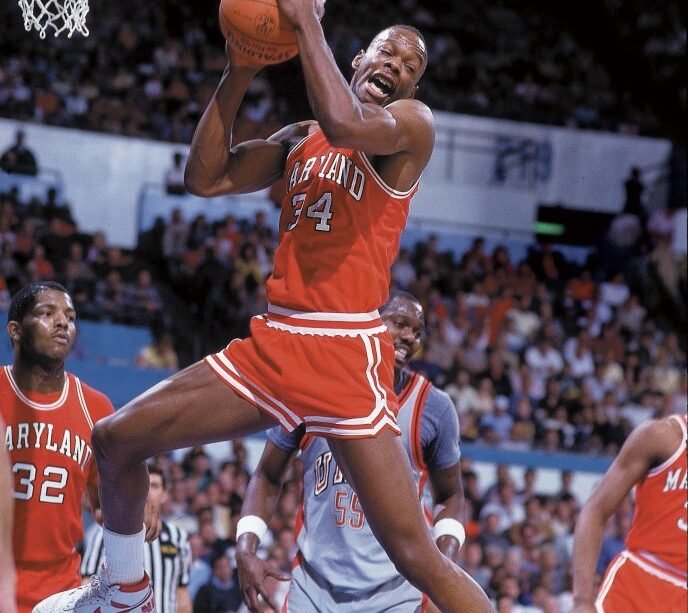
He was an area phenom who grew into the excellence. The hometown child from Landover, Maryland, who went on to not solely star on the University of Maryland, but in addition erect totally new creativeness ecosystems there.
His battles with the University of North Carolina’s Michael Jordan grew to become a direct, godlike assembly of the minds that now lives on grainy footage through YouTube. His perceived future was to be the architect of an prolonged dynasty with the Boston Celtics because the No. 2 choose within the star-crossed 1986 NBA draft.
How he’d enable legends like Larry Bird and Kevin McHale to age gracefully whereas he cemented his personal legend. How his deadly cocaine overdose grew to become a headline so crippling it utterly supercharged America’s already supercharged conflict on medicine and Black our bodies, the affect of which nonetheless lingers 40 years after the celebratory-turned-grieving night time in Washington Hall.
Simply put, Len Bias, the image, stays the only most painful “what if” in sports activities historical past.
“His life and gift have been reduced to cocaine and squandered opportunity instead of brilliance and charisma,” stated Dr. Imani Perry, an African American Studies professor at Harvard University and a 2023 MacArthur Fellow.
Yet, what about Bias, the 22-year-old younger man who shouldered the burden of the world and the hopes of many he’d by no means meet? The man who’d offer you a experience to seize a burger simply because he was hungry. The man who, for those who caught him away from campus hoopla and conversations that endlessly revolved round his professional potential, would at all times discuss religion. Not in an intensely religious means. But in a means that made his gratitude evident.
“I believe in God,” Bias would say in personal moments. “I owe my life to Him.”
There was the mischievous smile. The playful exuberance. The innate present to by no means make these round him really feel invisible, regardless of his large star energy. All of those qualities — all wrapped in a single elegant All-American physique. Basketball, very similar to life, within the 40 years since Bias’ demise, is painfully acquainted and wholly unrecognizable. The additional his demise distanced within the rearview, the extra comfy it grew to become to recollect him as a cautionary story.
It’s not incorrect. He is one. But it does overshadow an agonizing fact. Lost in every thing, together with time, was not the image, however the individual.
Bias was a two-time All-American and two-time ACC Player of the Year throughout his record-setting Maryland profession.Richard Mackson/Sports Illustrated through Getty Images
Listening to Scott Van Pelt talk about Len Bias is akin to listening to a gifted jazz musician agonize over music minus chain-smoking cigarettes and drowning in whiskey. Before he grew to become the legendary ESPN persona and broadcaster, Van Pelt was a scrawny child who referred to as College Park, Maryland, his collegiate dwelling, identical to Bias.
He doesn’t go so far as to name Bias a detailed buddy. He hooped with him a couple of instances. And at any time when Bias would even acknowledge his presence on campus with a dap or “wassup,” being acknowledged by Prince, Michael Jackson, Eddie Murphy, or any icons of the time wouldn’t have been the next honor. Van Pelt calls him “Leonard” as a result of that’s what famed Terrapins head leader Lefty Driesell referred to as Bias.
“He’s like the fish story that’s real,” Van Pelt stated. “You put your hands out and you’re like, ‘I caught a fish this big.’ With each syllable, your hands are getting wider apart. [Bias] was that. And because he passes, he’s frozen in time as the rest of us become older. It only magnifies the intensity of the pain of what might have been and the pain you know his family endured.”
Bias died in 1986. His brother, James aka “Jay,” was gunned down at Prince George’s Plaza mall — a five-minute drive from UMD’s campus — simply weeks earlier than Christmas in 1990. Their mom, Dr. Lonise Bias, channeled a dad or mum’s worst nightmare into changing into a robust and visual determine within the space, specializing in group and youth advocacy. She died earlier this 12 months. Bias’ father, James, survives however battles well being circumstances. The Bias household dedicated itself to sanity in a life that had robbed them of a lot.
It all traces again to that fateful night time 40 June’s in the past, a sequence response that doesn’t appear actual almost a half-century later. If you liked Bias, personally or just for the enjoyment that his expertise introduced into your life, the ache is everlasting. And numb.
Van Pelt heard the information at a 7-Eleven in Olney, Maryland, proper off Georgia Avenue, holding a Big Gulp. The lathered-up sweat on the again of his neck nonetheless feels damp, pondering again to such a scorching summer time’s day.
“Bias is dead, man,” Corey Salveson, his faculty roommate and highschool buddy, informed him.
“I remember every detail,” Van Pelt tells me, the crack in his voice stressing the emotional toll that’s lived with him on daily basis since.
If Len Bias had lived to action for the Boston Celtics – Andscape Read now
In a world earlier than social media, the information unfold on campus with the pace of an web rumor. Only it wasn’t a rumor. Lenny, or Leonard, or Bias — nevertheless you related with him then — was gone.
Myriam Léger didn’t know Bias till roughly a 12 months earlier than, when she transferred to Maryland. Mutual buddies introduced them collectively. McDonald’s runs have been responsible pleasures. She nonetheless hears Bias from the motive force’s seat of his automobile.
I’m on my means. Jump in!
Faith introduced deeper conversations out between them. Where the world noticed a once-in-a-generation ballplayer, Léger noticed a buddy and, in her phrases, a “big teddy bear.”
The subsequent a number of weeks have been a blur. A gutting, unhealed blur.
“His wake was wrapped around the block of the church. I was the next person literally to be let in to see the viewing and they shut it down, which I think was for my good,” Léger recalled. “Then they came out with the casket … I remember my knees giving out. I just remember the wailing and screaming in a massive line behind me.”
The emotional baggage by no means subsided. It grew to become a part of life’s rhythm.
“I don’t think we could process at that age. We were college students, and we didn’t know how to feel. But it took years before the campus could recover,” Léger stated. “For us students, it took years, a lot of time, before we really could. What we really needed was counseling. Life pushed us on.”
Bias’ funeral was held on campus, only a stones’ throw from the dorm room he died in.Bettmann
The city legend of what occurred the night time of June 19, 1986, hasn’t gone wherever. Bias’ buddy and pickup basketball comrade, Brian Tribble, was acquitted a 12 months later of supplying the potent batch of cocaine — allegedly straight from former Washington, D.C., drug kingpin Rayful Edmond.
In actuality, Bias was no completely different than many different faculty college students, then and even now. College college students experiment with medicine. The nice majority by no means fall their life because of this, and the nice majority aren’t thought-about basketball unicorns. It doesn’t justify any selections made, and definitely, the aftermath nobody noticed coming. But it does present context.
Toxicology reviews confirmed neither alcohol nor different medicine have been current in Bias’ system on the time of his demise. The dope wasn’t “stepped on,” by road requirements. This was highly effective cocaine, as pure as one may discover within the D.C.-metro space. Bias had no earlier coronary heart circumstances, which means the seizures and cardiac arrest he suffered have been a direct results of the coke.
In different phrases, what occurred to Len Bias was a freak accident with the gravest of penalties.
Nevertheless, because the years handed, empathy took a backseat to intense ethical judgment.
“I don’t feel sorry for Len Bias, not in the slightest,” the late Bobby Knight informed a set of high highschool gamers in 1990. “He had his own mind and his own body to take care of and just wasn’t smart enough to do it. … Somewhere along the way, he wanted to be one of the boys. He wanted to be cool. Well, he was so cool that he’s cold right now. That’s how cool he was.”
Those who knew him vehemently oppose the notion that Bias’ life is outlined by the blunder that price him his.
“Leonard wasn’t some dope fiend, man. He was doing the Tony Montana, what you thought you were supposed to do. Lenny doesn’t know what he’s doing, does too much, and he’s dead,” Van Pelt stated. “It’s a tragedy any time a life is cut short. But in this case, the fact that it was his own doing just magnifies it to the nth degree. And the fact that 40 years later, I feel compelled just to make this clear: This wasn’t some dude that had a drug problem. He made a tragic mistake, and it cost him as profoundly as any mistake could. But the wreckage, man, it’s just hard to even describe how heavy and hopeless it felt because there was no fixing the hurt that everyone was feeling, that we still feel.”
What’s been misplaced is an individual Van Pelt, Léger and others have been haunted by on daily basis since. Everyone was pleased with Bias, however so many understood that fame was a component of his new world he was nonetheless making an attempt to return to phrases with. Before his demise, he was — respectfully — goofy. He loved life. He loved individuals. He loved these little moments you don’t at all times get everytime you’re the marquee attraction in each room you walked into.
Bias was a school child. As regular as any faculty child may very well be in 1986. The solely distinguishing high quality was his fame. He was anticipated to be a savior on a franchise that had simply gained the NBA Finals and boasted a humiliation of future Hall of Famers.
“The Celtics were in so many ways a symbol of Boston as a racist city,” stated Perry, who was a 13-year-old residing within the metropolis then, “and Len Bias was so dazzling it seemed like a page might be turning.”
Where basketball may take him and alter the course of his household’s life was a relentless thought. He was a pupil getting ready to transitioning into life’s subsequent nice massive section: maturity. Every faculty graduate understands that weight. Bias was taking part in out on the world stage.
“He was more unsure and insecure. I definitely saw him in that space sometimes when we would just talk one-on-one, where he didn’t feel like he had to just always smile and be on,” Léger stated. “He had his doubts. I can tell you that.”
What nobody noticed coming is how America would come to eulogize, and in the end stereotype, Bias. He morphed right into a drug story and a degree of political leverage. His story grew to become about race and the laws enacted quickly after his physique was positioned within the floor. Exactly 131 days after Bias’ demise — and per week earlier than a crucial 1986 midterm election — The Anti-Drug Abuse Act of 1986 was signed into legislation by President Ronald Reagan.
It instantly grew to become generally known as the “Len Bias Law.”
“His death could’ve simply been understood as heartbreaking,” Perry stated. “[But] the ‘80s were one long backlash against the Civil Rights revolution.”
Former Sen. John Kerry, who voted for the “Len Bias Law” however went on to critique the federal government’s drug insurance policies, stated Bias “became a victim of all the stereotypes” after his demise.Cynthia Johnson/Getty Images
Though Bias died from a powder cocaine overdose, the legislation introduced into additional gentle the epidemic of crack cocaine and its grossly disproportionate affect on Black communities. This was first woman Nancy Reagan’s “Just Say No” America. Drugs have been unhealthy. Death from medicine was horrible. And any problem to that needed to be handled speedy penalties. The legislation launched the now notorious “100:1” rule that established the disparity in punishment for dealing crack-cocaine and powder cocaine: 5 grams of crack got here with a minimal five-year jail sentence, whereas it could take 500 grams of powder cocaine to obtain the identical sentence.
Crack was seen as Black, poor and violent. Cocaine was a luxurious drug, utilized by white and prosperous Americans.
Before the “Len Bias Law” was handed, Black Americans’ common federal drug sentence sat at an 11% greater clip than that of white Americans. By 1990, that very same quantity had ballooned to 49%.
John Kerry, the previous Secretary of State, diplomat, and 2004 Democratic presidential candidate, continues to be haunted by Bias and the carnage that got here afterward. At 82 years previous, the chaos and commotion dwell with him. The affect of all of it, much more so. A Massachusetts senator in Congress for almost 30 years, he stays heartbroken.
“There was this sense of, ‘Everything goes right, everything’s there.’ The hope, promise and exhilaration in all of New England were destroyed. More importantly, this young man was gone,” Kerry informed Andscape. “His family was wrecked. Everybody was just dreaming about Bird, [Robert] Parish, and McHale — and then suddenly Len Bias is out there on the court with them. How could things go wrong for Boston?”
Kerry voted in favor of the 1986 invoice that traditionally took on Bias’ identify. Over the years, although, his critiques of America’s drug insurance policies grew louder. Two years following the legislation’s passing, Kerry passionately spoke at a subcommittee listening to on medicine, terrorism, and worldwide operations. He referred to as America’s acts “complicitous” in drug trafficking and spending billions of taxpayer {dollars} to eliminate the problem.
“It’s mind-boggling,” he stated in 1988. “I don’t know if we’ve got the worst intelligence system in the world. I don’t know if we’ve got the best, and they knew it all and just overlooked it. But no matter how you look at it, something’s wrong. Something is really wrong out there.”
Will we ever be taught the teachings of Len Bias’ demise? – Andscape Read now
Decades later, Kerry’s synopsis on the true price of America’s drug wars hasn’t gone wherever. With Bias, he sees a younger man decreased to a logo — a distinguished determine in an period of chaos that altered the course of the nation’s historical past and fractured households. An difficulty that was by no means actually solved, however paved the best way to the following epidemic.
But how did America perceive Bias’ demise 40 years in the past? How did that understanding change? And who has been left to choose up the items of a puzzle that appears nearly unimaginable to place collectively?
When requested, Kerry goes silent. The ideas are organizing in his head in tandem with the feelings Bias brings out of him. The variety of impacts is dizzying. A younger man dying — the underlying level Kerry stresses all through — raised the urgency of drug consciousness, however that very same urgency trampled on widespread sense and what actually should have been accomplished.
“Politics got into it, and inevitably it came at a moment when the country was already troubled by fears of addiction, crime and public health. He became a victim of all the stereotypes,” Kerry stated. “This ricocheted throughout the politics of the moment. So many families experienced that pain. A lot of policies adopted in the years that came had unintended consequences.”
He pauses as soon as extra.
“The 1980’s drug crisis had big racial dimensions involved. A lot of communities suffered disproportionately. The policy responses that were quickly put into place had unequal consequences. America continues to wrestle with some of those same impacts and questions today. We’ve got an obligation not just to reflect on the dramatic, incredible impact of the superstar and what-if’s about future Celtics teams. Frankly, a lot of that pales in front of the responsibility we all have to remember not just what happened, but to remember what we learned from what happened.”
The defending NBA champion Boston Celtics, who chosen Bias second within the NBA draft with a choose acquired from Seattle, couldn’t hold their dynasty going.Bettmann
Bias met his remaining resting place 40 years in the past. The late Rev. Jesse Jackson spoke at Bias’ memorial service and grave website, the place he pleaded with American youth to abstain from medicine.
The questions that encompass Bias, although, haven’t any finish date so long as basketball stays a pivotal a part of America’s financial and cultural street map.
Would he actually have prolonged Boston’s dynasty? The Celtics superior to at least one extra Finals following his demise (the following campaign in 1987) and didn’t attain one other till successful the title in 2008.
Could he have actually altered Michael Jordan’s trajectory? The identical Michael Jordan who by no means feared Bias’ expertise however understood how limitless it truly was?
How can we reconcile the way it took the University of Maryland 28 years following Bias’ demise to induct him into the varsity’s Athletic Hall of Fame?
Those questions are necessary, and all a part of the bigger dialog of telling Bias’ story utterly and actually. Yet, those that knew him and people who lived with and after him wrestle with a special set of scars that by no means closed and can by no means heal.
It’s not concerning the wins, losses, and parades that by no means got here. It’s about Len Bias, the child from Prince George’s County who had the world at his fingertips and supplied hope to so many. It’s about Len Bias, the buddy. The son. The chapters they cherished writing with him, regardless of how small a personality they performed in his story.
In 1998, greater than a decade after Bias’ demise, however inside a society nonetheless very a lot coping with the ripple results of it, DMX’s “Slippin” positioned grief into perspective.
“To live is to suffer. But to survive, well, that’s to find meaning in the suffering.”
For a lot of his life, and even after his 2021 demise, X is immortalized as a transformative artist — however one whose struggles with habit ran in tandem, and at instances overtook, his legacy. Many individuals bear in mind Bias as cocaine.
Both have been a lot greater than their demons or their endings.
The eternal tragedy round Bias is remembering the younger man who spent precisely 8,250 days on Earth. The younger man born 4 days earlier than President John F. Kennedy’s assassination — and whose demise fractured a rustic in a separate, however equal prophecy. What occurred after June 19, 1986, was past Bias’ management.
“Perhaps,” Perry stated, “we, too, have reduced Len Bias’ life.”
“What gets lost is not the what-if,” Van Pelt famous, “but the what was.”
Len Bias, the image, by no means wanted saving. Len Bias, the 22-year-old, did.
He nonetheless does.
Justin Tinsley is a senior tradition author for Andscape. He firmly believes “Cash Money Records takin’ ova for da ’99 and da 2000” is the only most impactful assertion of his technology.